
Department of History and Social Sciences
Choate Rosemary Hall
Wallingford, Connecticut
History 419
AMERICAN DIPLOMACY AND INTERNATIONAL RELATIONS
Winter 1998-1999 term
Hypertext Syllabus
| TABLE OF CONTENTS Goals of the Course Daily Preparation Classroom Work Written Work Texts and Course Materials Program and Workload Schedule of Meetings and Assignments Links |
Mr. Ned
Gallagher Free Day: Tuesday Offices: e-mail: ngallagher@choate.edu |
"It may seem melodramatic to say that the
United States and Russia represent Good and Evil.
But if we think of it that way, it helps to clarify our perspective on the world
struggle."
- Richard M. Nixon
History 419 explores the course of United States foreign policy in this century and the intellectual and historical foundations upon which it has been shaped. In the process, the systematic study of international relations as a branch of the discipline of political science will be introduced.
The goals of this course are: (1) to develop and refine the vital skills employed in the study of history and political science; (2) to acquire broadly-based survey knowledge of U.S. foreign policy in the twentieth century and the major themes reflected therein; (3) to foster a basic understanding of the principles underlying international relations; and (4) to encourage a sharp critical perspective in dealing with contemporary geopolitics.
Assigned Reading: This is the main input of factual material, as well as various interpretations and analyses of that material. Clearly you cannot learn much in the classroom without doing the reading first. Much of our discussion in class will be conducted by the Socratic method; that is, you will complete certain assignments and will be expected to answer questions based on them. It is therefore important that you learn how to understand the material before you come to class. Looking at it another way, we will not have enough time in class to cover all the things that might appear on tests, so you had better learn them by yourself.
Course credo:
I hear, and I forget;
I see, and I remember;
I do, and I understand.
- Chinese proverb
Like athletes in training, young scholars must be sure they are properly nourished. As the reading you do for this course will be your primary "food for thought," you should pay close attention to how this nourishment is being ingested. You may find--like the decathlete weaned on junk food--that easy shortcuts will undermine your efforts when the moment of truth arrives. Assigned reading will provide focal points for daily discussion. I will try to give you pointers in advance of what to look for in the reading to enable you to get more out of it. Get into the habit of reading the syllabus carefully each night before you begin the assignment.
Lectures: This method will be used sparingly, as generally it removes the burden of active learning from the student, emphasizing a more passive role instead. Because, however, much of the information in the course will be new to you, I will provide background information when relevant to highlight material and to fill in gaps left by the reading. For the most part, however, I will "lecture" only in the sense of guiding class discussion.
Discussions: The core of the course consists of the
Socratic discussions in class, in which we will explore the reading and the topic(s) at
hand. Productive discussions are frequently contradictory and ambiguous, producing
different perspectives to chew on rather than kernels of truth to swallow whole. Asking
seemingly stupid questions may well be a way of overcoming confusion and beginning to
understand. Each person will be expected to come to his or her own understanding of the
processes involved. Such activity is not without a considerable degree of intellectual
risk, but it is hoped that in the discussions you will be willing to take such risks for
the very real intellectual gains which will accrue both to you and to the group as a
whole.
Since the main learning in the course comes from the reading
and discussions, you should attend class and be prepared to discuss the reading. If you do
neither, do not be surprised to feel you are learning little, wasting your time, or
receiving a poor or failing grade, for you are not--in any meaningful sense--taking the
course. You cannot learn much simply by writing the papers and taking the exams. Nor can
you pass the course; final grades will be based on a combination of class and written
work.
Oral Presentations: There will be regular opportunities in this course to share your ideas about the subject matter with the rest of the class on a more formal basis. While academia emphasizes the written word, most "real world" situations are centered on oral/aural interaction; hence the emphasis on developing skills in face-to-face communication. Debates, reports, role playing, and other activities will be evaluated in a manner similar to the grading of written work.
It is in your writing that you have the chance to work out your ideas most rigorously and to communicate these to others. I will give you some general notes on writing, but I also encourage students who would like to work on their writing to see me, to submit drafts of their papers for criticism in advance of their due dates, or to consider rewriting papers. In the meantime, the following are some general guidelines regarding written work in the course.
Quizzes: These serve two primary purposes. They are, of course, an insurance policy of sorts, whereby I, the teacher, can better expect you to have put in the requisite effort on assigned reading. More importantly, however, they are also a channel of feedback on how well you understand the material presented in the reading and in class. You can expect quizzes frequently, often unannounced.
Exams: These are reflective and integrative, designed to help you pull together main themes in the course. Depending on length, exams generally include objective questions, separate short definition or identification questions, and longer interpretive essays. All tests will demand not only that you know what has been studied just recently, but that you be able to connect that material in a general thematic way with what was studied earlier in the year. Each exam will be an important opportunity for me to assess your mastery of the knowledge and the skills the course seeks to develop. More importantly, an exam should be considered a worthwhile educational experience in its own right. A comprehensive final examination will be administered at the end of the term.
Make-up tests: In the event of an excused absence on the day of a scheduled exam, a mutually convenient date for a make-up test will be determined by the teacher and the student. It is the student's responsibility to reschedule and take the make-up exam within seven (7) days of the original scheduled test date. Make-up exams usually are given in essay form.
Short Papers: Papers on set topics keyed to assigned reading are designed to encourage you to work out your understanding of a given problem. As such, there are no 'right' answers, only how well you think your way through the problem as evidenced by the clarity and logic of your analysis, argumentation, and writing. All papers should include footnotes and bibliography when appropriate, and be presented in standard form, all of which is discussed in the guidelines I'll make available in class and online. Word processing is highly recommended if possible; if not, typed papers are always appreciated, though not required.
Position Papers: Each term, some students express an interest in "extra credit" work. While I generally discourage this approach--I would prefer you to concentrate on doing your best work on the scheduled quizzes, tests, and papers--I will welcome brief position papers, dealing with anything related to the course, in consideration for "brownie points." I will not put a firm grade or value on such work, which will be returned to you with my comments, but I can state that submission of position papers only can help in the determination of your final term grade.
Submission of Papers: Due dates for all major written assignments are announced in the syllabus at the outset of the term; time is allowed for working on them whenever possible and you should program your time accordingly (e.g., writing a paper before it is due if necessary to avoid conflicts with other work). Late work will be accepted, but, in the interest of fairness to all, it will be penalized one notch ("A-" to "B+") for the first 24-hour period it is overdue, two notches for the second, and so on. Late term papers will be penalized one full letter grade ("A-" to "B-") every 24 hours. Only in extreme cases will late work be accepted more than five days after it is due. School policy dictates that late work accepted after the last day of classes in the term can receive a grade of no more than 50%.
Grading and Criticism: Grading of papers and exams
will be based on the quality and thoroughness of your research (where appropriate), the
originality and coherence of your analysis and argumentation, and the clarity of your
writing. While all written work should be your own, in accord with the school expectations
regarding academic honesty, you are encouraged to discuss your work with me and with each
other if you wish. You are also encouraged to respond to my criticisms of your work and to
discuss ways in which you might improve your writing with me, including rewriting and
resubmitting papers where appropriate.
More important than the actual grade you receive is my
written commentary on your paper. I hope you will pay close attention to the comments made
on the evaluation sheet and in the body of the text; they are written in hopes of
improving both your writing and your thinking. These comments can refer to your specific
strengths and weaknesses as a historian and as a writer in ways that a simple number or
letter grade cannot.
I hope you will feel free to share with me any questions or
concerns about any particular grade; I also hope, however, that you are genuinely
concerned with what you learn in the course rather than the mark (or other such
superficial feedback) you get. For the sake of uniformity, the school has established a
guide to converting scores on a 100-point scale to grades ranging from A+ to F:
| A+: 97-100 | B+: 87-89 | C+: 77-79 | D+: 67-69 | |
| A: 93-96 | B: 83-86 | C: 73-76 | D: 63-66 | F: 0-59 |
| A-: 90-92 | B-: 80-82 | C-: 70-72 | D-: 60-62 |
These texts for the course--available at the school bookstore--should be purchased by all students immediately:
This course will be orthodox in its presentation: in general, you'll read something before each class meeting, and in class we'll discuss what you've read--what I call "Socratic discussion." You'll be expected to write short yet demanding papers, take several period tests, and participate regularly in class.
Every effort has been made to keep the length of daily assignments manageable. Many worthwhile assignments were abbreviated or scrapped from the syllabus altogether. It's important, therefore, that you commit yourself now to keeping up with what is included among the assignments below; you'll be expected to complete the assigned homework before each class.
What follows is what we'll try to cover during the term. It may be adjusted from time to time for any number of reasons. The homework for the next class is always the next assignment unless you are told differently. You'll find each entry on the schedule below contains some instructive questions and ideas you should consider in preparing for class; get into the habit reading the syllabus carefully each night as you begin your homework.
Schedule of Meetings and Assignments
1. Introduction. No assignment.
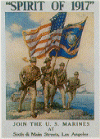
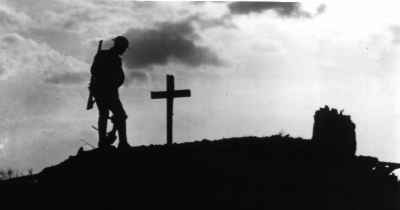
2. Two Critical Frameworks. Read the introduction to this syllabus, above, and also read the essays in the first chapter of the Paterson anthology, pp. 3–18 and 22–26. These writers attempt to root U.S. foreign policy within the context of broad themes in international relations. Which thesis do you find most compelling? In class we’ll discuss the appropriate relationship between morality and diplomacy; to what extent do you think considerations of morality should factor into the policy-making process? As prologue to the material we'll be studying this term, we will also review my list of the ten most important topics in U.S. foreign policy between 1776 and 1914: Washington's Farewell Address, freedom of the seas, Monroe Doctrine, Manifest Destiny, Frederick Jackson Turner, Alfred Thayer Mahan, "Remember the Maine!," the Open Door Note, the Big Stick, Dollar Diplomacy.
 |
 |
3. Over There: the U.S. & Europe, 1900–1917. Read documents in Paterson, pp. 30–38, plus the Link essay, pp. 47–52. Those of you in need of a little brushing up on the roots of the European war may want to skim the first chapter in the Stoessinger book. Consider the development of U.S. policy between 1914 and 1917 in the context of the previous assignment. Where do you see policy based on principle? On national interest? On economic motivations? On something else? Do you agree with Link's portrayal of Wilson as a pragmatist?
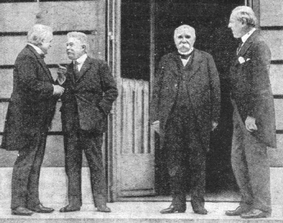
The Allies at Versailles:
Britain's Lloyd George, Italy's Orlando, France's Clemenceau, and America's Wilson
4. Versailles and Its Aftermath. Read documents in Paterson, pp. 38–47 plus the Knock essay which begins on p. 62. In class, we’ll focus on the efforts of the Great Powers to avoid another world war. Why did those efforts fail? To what extent did the Versailles negotiations reflect the values of Wilson's Fourteen Points? What was the U.S. response to the League of Nations in the wake of the Conference? Be sure you can answer the questions based on the specific historical data this reading presents.
5. Storm Clouds. Read Ambrose, pp. 1–14. What motivated American policy-makers to abandon isolationism? How do you judge Roosevelt’s performance as president in this time of crisis? How might he have proceeded differently? Keep track of the who, what, where, and when of the major elements of U.S. policy (e.g., cash-and-carry, destroyer deal, lend-lease, embargo, etc.) in your notebooks. Period test at #10 below.
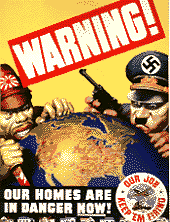 6. Interpretation: President as
Policy-Maker. Read the essays in Paterson, pp. 148–174. Prepare for an in-class
mass debate on the question: Was FDR an isolationist or an internationalist? Be prepared
to back up your analysis with specific historical data.
6. Interpretation: President as
Policy-Maker. Read the essays in Paterson, pp. 148–174. Prepare for an in-class
mass debate on the question: Was FDR an isolationist or an internationalist? Be prepared
to back up your analysis with specific historical data.
7. "The Big One" I: The European Theater. Read Ambrose, pp. 15–34. What was the basic Allied strategy? What were the strengths and weaknesses of the various combatants? What were the turning points of the conflict? Ask me in class about the relationship between military might and political wisdom.
8. "The Big One" II: Interpretation. Read documents in Paterson, TBA, and Gary R. Hess, "Roosevelt as Practical Idealist," pp. 202–215.
9. "The Big One" III: The Pacific Theater. Read Ambrose, pp. 34–51. What was the basic American strategy? What were the strengths and weaknesses of the combatants? What were the turning points of the conflict? Ask me in class about the relationship between economic power and military might.
10. Period Test #1. This test, covering everything we’ve studied so far, will be administered on the last class before holiday break. Don’t blow it off in your eagerness to get out of here; this is a good opportunity to put some points in the bank for later in the term. See my online guide to preparing for history tests.
11. Interpretation: Atomic Diplomacy? Read the Barton J. Bernstein essay in Paterson, pp. 265–284. This is a variation on the revisionist interpretation of the Hiroshima and Nagasaki bombings proposed by historian Gar Alperovitz.
12. Roots of a Cold War. Read Ambrose, pp. 52–74. What developments in the wake of the world war contributed to the atmosphere of distrust between the United States and the Soviet Union? How did Harry Truman's attitudes about the postwar world differ from those of his predecessor?
13. "Two Halves of the Same Walnut." Read Ambrose, pp. 75–94. How did the specific crisis in Greece result in the broad policy framework we call the Truman Doctrine? To what extent does the Marshall Plan illustrate political wisdom? What is significant about the National Security Act?
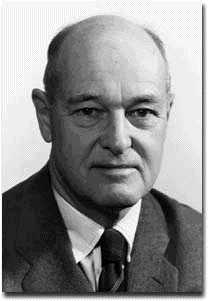
George F. Kennan
14. Soviet Expansionism as a Policy Framework. Read X (George F. Kennan), "Sources of Soviet Conduct." This article originally appeared in the July 1947 issue of Foreign Affairs and was instrumental in shaping the views of a generation of Cold Warriors. Do you agree with Kennan's interpretation of the historical forces shaping Russian motivations? How do the lessons of World War II shape Kennan's policy proposals?
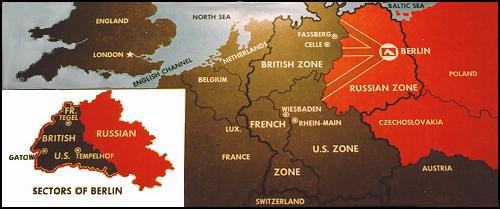
15. Strategies of Containment. Read Ambrose, pp. 95–113. How do you rate the U.S. handling of the crisis in Germany? To what extent does in reflect Kennan's ideas in action?
16. Interpretation: Cold War Historiography. Read Gaddis essay to be distributed in class. This historiographical essay provides an overview of the scholarship concerning the period immediately following the war.
17. Paper #1. Prepare a paper of 2–3 pages in length arguing a clear thesis (those enrolled in the honors section should write 4–5 pages with an emphasis on historiography) in response to the following: "Historical events between 1945 and 1949 were misinterpreted by the United States, which formulated a policy of containment which was unnecessarily aggressive." There are two documents related to writing papers that I've placed online for your perusal: one about argumentation in history papers and one about avoiding common writing errors. Papers are due at the beginning of class. In class, McCarthyism videotape.
18. Intervention in Asia I: Korea. Read Stoessinger, pp. 53–77.
19. The "New Look:" Eisenhower & Dulles. Read Ambrose, pp. 127–150. Guatemala documents.
20. Interpretation: Who’s In Charge? Evens read Arthur M. Schlesinger, Jr., "Eisenhower the Hawk," pp. 469–480; odds read Fred I. Greenstein, "Eisenhower Revised: The Activist President," pp. 456–469; all read Robert J. McMahon, "Eisenhower’s Failure in the Third World," pp. 480–496.
21. Brinksmanship. Read Ambrose, pp. 151–170. Also read documents TBA.
22. Camelot. Read Ambrose, pp. 171–189. essay
23. Case Study: Showdown in the Caribbean I. Read RFK, pp. 23–72. Also read documents TBA.
24. Case Study: Showdown in the Caribbean II. Read RFK, pp. 73–128.
25. Paper #2. 2–3 pages. Due at the beginning of class.
26. The 1960s. Read Ambrose, pp. 190–206.
27. Intervention in Asia II: Vietnam. Read Stoessinger, pp. 80–108. Stoessinger treats the war as a gradual escalation over the course of five presidential administrations; be sure you understand how the U.S. policy in Vietnam evolved between the 1945 and 1975.
28. Nixon and Southeast Asia. Read Ambrose, pp. 224–253.
29. Interpretation: the U.S. in Indochina. Read George C. Herring, "Why the United States Failed in Vietnam," pp. 607–616, and Gabriel Kolko, "To Master the Third World," pp. 599–607.
30. Interpretation: King Richard and Prince Henry. All read documents: "Henry Kissinger on Rapprochement with China," pp. 623–626, and "Kissinger on Détente," pp. 629–634. Also read John G. Stoessinger, "A Safer World," pp. 642–655.
31. Interpretation: Critical Views of Kissinger. All read documents: "United States Covert Action in Chile," and "The Journalist Anthony Lewis on Kissinger," pp. 635–642. Also read Stanley Hoffman, "Flawed Design and Diplomatic Disaster," pp. 655–673.
32. Period Test #2. Covering everything studied in the course to date, with a particular emphasis on material covered since the last period test.
33. War in the Holy Land. Skim Stoessinger, pp. 136–178.
34. The Middle East and Africa: An Overview. Read Ambrose, pp. 254–280. Relations with the Third World are often thought of as unglamorous, yet this will be considered an increasingly important part of the world within your lifetimes. In what ways have the Rhodesian and South African situations dominated the regional political agenda? What issues other than apartheid now confront the nations of the continent?
35. The Carter Years. Read Ambrose, pp. 281–302 and documents: "Jimmy Carter’s Critique of the Nixon-Ford-Kissinger Foreign Policy," pp. 676–677 and "Ronald Reagan’s Critique of Carter’s Foreign Policy," pp. 681–682. In your notebooks, list the specific successes and failures of the Carter Administration in managing the nation’s foreign policy. Carter’s emphasis on human rights has been referred to as a double-edged sword for American policy-makers; why?
36. Mr. Reagan Goes to Washington. Read Ambrose, pp. 303–327.
37. The Reagan Legacy. Read Ambrose, pp. 327–351, and document: "Reagan on the Rebuilding of American Military Power," pp. 683–684.
38. The Persian Gulf: A Crucible of Terror. Read Stoessinger, pp. 181–206.
39. A New World Order? Read Ambrose, pp. 352–380.
40. The Gulf War and Beyond. Read Ambrose, pp. 381–397.
41. Interpretation: Prospects for the Future. Read John Lewis Gaddis, "The Long Peace: Stability in the International System," pp. 684–690, and Paul Kennedy, "Economic Decline and Imperial Overstretch," pp. 708–720.
Last revised: 01 December 1999
Syllabus copyright © 1998, 1999 Ned Gallagher. All rights reserved.
Some multimedia materials and Internet resources compiled and developed by Thomas Foster,
CRH History Department.